

Adhesive Tape Carriers Market Outlook
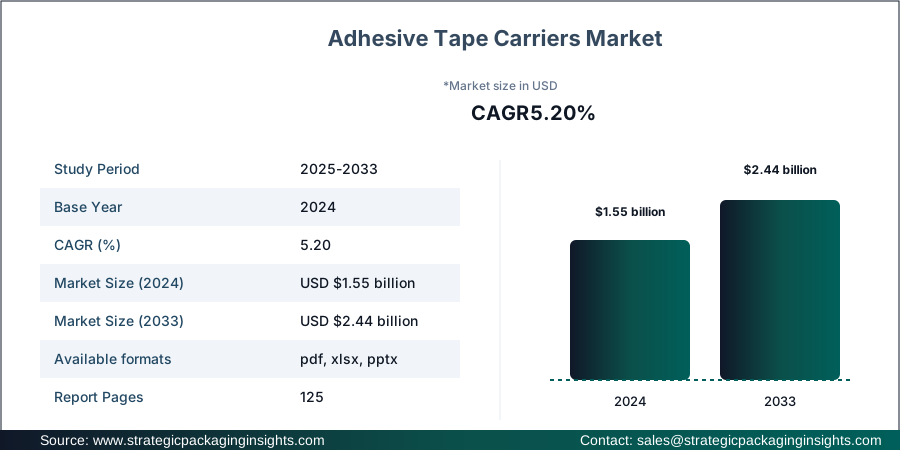
The adhesive tape carriers market was valued at $1.55 billion in 2024 and is projected to reach $2.44 billion by 2033, growing at a CAGR of 5.20% during the forecast period 2025-2033. This market is witnessing significant growth due to the increasing demand for adhesive tapes in various applications such as electronics, packaging, and industrial bonding. The versatility and efficiency of adhesive tapes in providing strong bonding solutions without the need for mechanical fasteners are driving their adoption across multiple industries. Additionally, advancements in adhesive technologies and the development of eco-friendly and sustainable adhesive solutions are further propelling market growth. The rise in consumer electronics and the automotive industry's expansion are also contributing to the increased demand for adhesive tape carriers.
However, the market faces certain challenges that could hinder its growth potential. Regulatory restrictions on the use of certain chemicals in adhesive formulations, particularly in regions with stringent environmental regulations, pose a significant restraint. Additionally, the fluctuating prices of raw materials used in the production of adhesive tapes can impact the overall cost structure, affecting profit margins for manufacturers. Despite these challenges, the market holds substantial growth potential, driven by the increasing focus on sustainable and recyclable adhesive solutions. The development of bio-based adhesives and the adoption of advanced manufacturing technologies are expected to create new opportunities for market players in the coming years.
Report Scope
| Attributes | Details |
| Report Title | Adhesive Tape Carriers Market Size, Future Growth and Forecast 2033 |
| Material Type | PET, Paper, Polyolefin, Others |
| Adhesive Type | Acrylic, Rubber, Silicone, Others |
| Application | Electronics, Packaging, Industrial Bonding, Others |
| End Use | Electrical & Electronics, Automotive, Consumer Goods, Others |
| Region | Asia Pacific, North America, Latin America, Europe, Middle East & Africa |
| Base Year | 2024 |
| Historic Period | 2017-2023 |
| Forecast Period | 2025-2033 |
| Number of Pages | 125 |
| Customization Available | Yes* |
Opportunities & Threats
The adhesive tape carriers market presents numerous opportunities for growth, primarily driven by the increasing demand for eco-friendly and sustainable adhesive solutions. As environmental concerns continue to rise, consumers and industries are shifting towards products that have a minimal environmental impact. This trend is encouraging manufacturers to develop bio-based adhesives and recyclable tape carriers, which not only meet regulatory standards but also cater to the growing consumer preference for sustainable products. Additionally, the rapid advancements in adhesive technologies are opening new avenues for innovation, allowing companies to create high-performance tapes that offer superior bonding strength and durability. These innovations are particularly beneficial in industries such as electronics and automotive, where the demand for reliable and efficient bonding solutions is paramount.
Another significant opportunity lies in the expanding applications of adhesive tapes across various industries. The electronics industry, in particular, is witnessing a surge in demand for adhesive tapes due to the increasing production of consumer electronics and the miniaturization of electronic components. Adhesive tapes offer a lightweight and efficient solution for bonding and insulating electronic components, making them an essential part of the manufacturing process. Similarly, the automotive industry is increasingly adopting adhesive tapes for applications such as bonding, sealing, and vibration damping, driven by the need for lightweight and fuel-efficient vehicles. These expanding applications are expected to drive the demand for adhesive tape carriers, providing lucrative growth opportunities for market players.
Despite the promising opportunities, the adhesive tape carriers market faces certain threats that could impact its growth trajectory. One of the primary challenges is the stringent regulatory environment governing the use of chemicals in adhesive formulations. Regulations such as the European Union's REACH (Registration, Evaluation, Authorisation, and Restriction of Chemicals) impose strict guidelines on the use of certain substances, which can limit the availability of raw materials and increase compliance costs for manufacturers. Additionally, the market is highly competitive, with numerous players vying for market share. This intense competition can lead to price wars and margin pressures, posing a threat to the profitability of market participants. To mitigate these threats, companies need to focus on innovation, product differentiation, and strategic partnerships to maintain a competitive edge in the market.
Drivers & Challenges
The adhesive tape carriers market is primarily driven by the increasing demand for adhesive solutions in various end-use industries. The electronics industry, in particular, is a major driver of market growth, as adhesive tapes are extensively used for bonding and insulating electronic components. The rise in consumer electronics production, coupled with the trend towards miniaturization of electronic devices, is fueling the demand for high-performance adhesive tapes. Additionally, the automotive industry's focus on lightweight and fuel-efficient vehicles is driving the adoption of adhesive tapes for applications such as bonding, sealing, and vibration damping. These factors, combined with the growing emphasis on sustainable and eco-friendly adhesive solutions, are propelling the growth of the adhesive tape carriers market.
Another key driver of market growth is the rapid advancements in adhesive technologies. Manufacturers are continuously investing in research and development to create innovative adhesive solutions that offer superior bonding strength, durability, and environmental sustainability. The development of bio-based adhesives and recyclable tape carriers is gaining traction, as consumers and industries increasingly prioritize products with minimal environmental impact. These technological advancements are not only enhancing the performance of adhesive tapes but also expanding their applications across various industries, further driving market growth. Additionally, the increasing focus on automation and advanced manufacturing processes is enabling companies to produce high-quality adhesive tapes more efficiently, contributing to the overall growth of the market.
Despite the positive growth drivers, the adhesive tape carriers market faces several challenges that could hinder its expansion. One of the primary challenges is the fluctuating prices of raw materials used in the production of adhesive tapes. The volatility in raw material prices can impact the overall cost structure, affecting profit margins for manufacturers. Additionally, the market is subject to stringent regulatory requirements, particularly in regions with strict environmental regulations. Compliance with these regulations can increase production costs and limit the availability of certain raw materials, posing a challenge for market players. Furthermore, the intense competition in the market, with numerous players vying for market share, can lead to price wars and margin pressures, impacting the profitability of companies. To overcome these challenges, market participants need to focus on innovation, cost optimization, and strategic partnerships to maintain a competitive edge.
Market Share Analysis
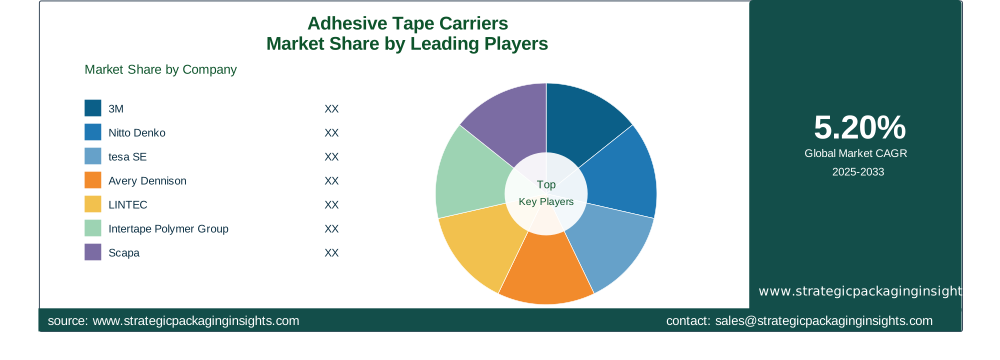
The adhesive tape carriers market is characterized by a highly competitive landscape, with several key players dominating the market. Companies such as 3M, Nitto Denko, tesa SE, Avery Dennison, and LINTEC are among the leading players, holding significant market shares. These companies have established strong brand recognition and a wide distribution network, enabling them to maintain a competitive edge in the market. Additionally, their focus on innovation and product development has allowed them to offer a diverse range of adhesive solutions, catering to various end-use industries. The competitive landscape is further intensified by the presence of regional players and new entrants, who are continuously striving to capture market share through product differentiation and competitive pricing strategies.
3M is one of the leading companies in the adhesive tape carriers market, known for its extensive product portfolio and strong focus on innovation. The company offers a wide range of adhesive solutions, catering to industries such as electronics, automotive, and consumer goods. 3M's commitment to research and development has enabled it to introduce innovative products that meet the evolving needs of its customers. Similarly, Nitto Denko is another major player in the market, renowned for its high-performance adhesive tapes and strong global presence. The company's focus on sustainability and eco-friendly solutions has positioned it as a preferred choice among environmentally conscious consumers and industries.
tesa SE, a subsidiary of Beiersdorf AG, is a prominent player in the adhesive tape carriers market, offering a comprehensive range of adhesive solutions for various applications. The company's strong emphasis on quality and customer satisfaction has earned it a loyal customer base across the globe. Avery Dennison is another key player, known for its innovative adhesive technologies and strong focus on sustainability. The company's commitment to reducing its environmental footprint and developing eco-friendly adhesive solutions has resonated well with consumers and industries alike. LINTEC, a leading Japanese manufacturer, is also a significant player in the market, offering a diverse range of adhesive tapes for industrial and consumer applications.
Other notable players in the adhesive tape carriers market include Intertape Polymer Group, Scapa, Shurtape Technologies, Saint-Gobain, and Berry Global. These companies are continuously investing in research and development to enhance their product offerings and expand their market presence. The competitive landscape is further shaped by strategic partnerships, mergers, and acquisitions, as companies seek to strengthen their market position and capitalize on emerging opportunities. Overall, the adhesive tape carriers market is characterized by intense competition, with key players focusing on innovation, sustainability, and customer-centric strategies to maintain their competitive edge.
Key Highlights
- The adhesive tape carriers market is projected to grow from $1.55 billion in 2024 to $2.44 billion by 2033, at a CAGR of 5.20%.
- Increasing demand for eco-friendly and sustainable adhesive solutions is driving market growth.
- Advancements in adhesive technologies are opening new avenues for innovation and expanding applications.
- The electronics and automotive industries are major drivers of market demand.
- Stringent regulatory requirements and fluctuating raw material prices pose challenges to market growth.
- Key players include 3M, Nitto Denko, tesa SE, Avery Dennison, and LINTEC.
- Intense competition and the presence of regional players are shaping the competitive landscape.
- Strategic partnerships, mergers, and acquisitions are common strategies among market players.
- The development of bio-based adhesives and recyclable tape carriers is gaining traction.
Top Countries Insights
In the adhesive tape carriers market, the United States stands out as a key player, with a market size of approximately $450 million and a CAGR of 4%. The country's robust manufacturing sector, coupled with the increasing demand for adhesive solutions in the automotive and electronics industries, is driving market growth. Additionally, the focus on sustainable and eco-friendly products is encouraging manufacturers to develop innovative adhesive solutions that meet regulatory standards and consumer preferences.
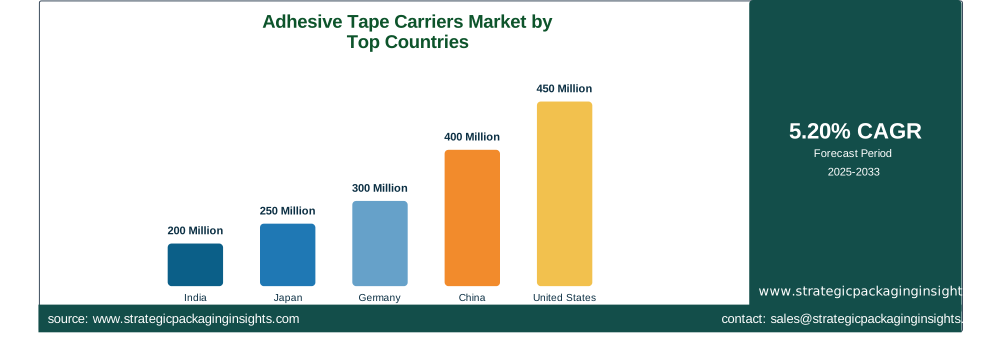
China is another significant market for adhesive tape carriers, with a market size of around $400 million and a CAGR of 6%. The country's booming electronics industry, driven by the increasing production of consumer electronics and the miniaturization of electronic components, is a major growth driver. Furthermore, the automotive industry's expansion and the growing emphasis on lightweight and fuel-efficient vehicles are contributing to the increased demand for adhesive tapes in China.
Germany, with a market size of approximately $300 million and a CAGR of 5%, is a key market for adhesive tape carriers in Europe. The country's strong automotive industry, known for its focus on innovation and quality, is a major driver of market demand. Additionally, the increasing adoption of adhesive solutions in the electronics and packaging industries is further propelling market growth in Germany.
Japan, with a market size of around $250 million and a CAGR of 3%, is a significant market for adhesive tape carriers in Asia. The country's advanced manufacturing sector and the increasing demand for high-performance adhesive solutions in the electronics and automotive industries are driving market growth. Additionally, the focus on sustainability and the development of eco-friendly adhesive solutions are gaining traction in Japan.
India, with a market size of approximately $200 million and a CAGR of 7%, is an emerging market for adhesive tape carriers. The country's growing manufacturing sector, coupled with the increasing demand for adhesive solutions in the automotive and consumer goods industries, is driving market growth. Additionally, the focus on sustainable and recyclable adhesive solutions is encouraging manufacturers to develop innovative products that cater to the evolving needs of consumers and industries.
Adhesive Tape Carriers Market Segments Insights

Material Type Analysis
The material type segment of the adhesive tape carriers market is categorized into PET, paper, polyolefin, and others. PET (Polyethylene Terephthalate) is one of the most widely used materials due to its excellent strength, durability, and resistance to environmental factors. The demand for PET-based adhesive tapes is driven by their extensive use in the electronics and automotive industries, where high-performance bonding solutions are required. Additionally, the recyclability of PET makes it an attractive choice for manufacturers focusing on sustainable and eco-friendly products. Paper-based adhesive tapes, on the other hand, are gaining popularity in packaging applications due to their biodegradability and cost-effectiveness. The increasing demand for sustainable packaging solutions is driving the growth of paper-based adhesive tapes.

Polyolefin-based adhesive tapes are known for their flexibility, chemical resistance, and low cost, making them suitable for a wide range of applications, including packaging and industrial bonding. The demand for polyolefin-based tapes is expected to grow, driven by their versatility and cost-effectiveness. Other materials used in adhesive tape carriers include specialty polymers and composites, which offer unique properties such as high-temperature resistance and electrical conductivity. These materials are used in niche applications where specific performance characteristics are required. Overall, the material type segment is characterized by a diverse range of options, each catering to specific industry needs and applications.
Adhesive Type Analysis
The adhesive type segment of the adhesive tape carriers market is divided into acrylic, rubber, silicone, and others. Acrylic adhesives are widely used due to their excellent bonding strength, durability, and resistance to environmental factors such as UV light and moisture. The demand for acrylic-based adhesive tapes is driven by their extensive use in the electronics and automotive industries, where reliable and long-lasting bonding solutions are essential. Rubber-based adhesives, known for their flexibility and strong initial tack, are commonly used in packaging and industrial bonding applications. The cost-effectiveness of rubber-based adhesives makes them a popular choice for manufacturers seeking economical bonding solutions.

Silicone adhesives are known for their high-temperature resistance and excellent electrical insulation properties, making them suitable for applications in the electronics and automotive industries. The demand for silicone-based adhesive tapes is expected to grow, driven by the increasing production of consumer electronics and the trend towards miniaturization of electronic components. Other adhesive types include specialty adhesives that offer unique properties such as chemical resistance and conductivity, catering to niche applications in industries such as aerospace and medical devices. Overall, the adhesive type segment is characterized by a wide range of options, each offering specific performance characteristics to meet the diverse needs of end-use industries.
Application Analysis
The application segment of the adhesive tape carriers market includes electronics, packaging, industrial bonding, and others. The electronics industry is a major driver of market demand, as adhesive tapes are extensively used for bonding and insulating electronic components. The rise in consumer electronics production, coupled with the trend towards miniaturization of electronic devices, is fueling the demand for high-performance adhesive tapes. Additionally, the increasing focus on lightweight and compact electronic devices is driving the adoption of adhesive solutions that offer strong bonding strength and durability.
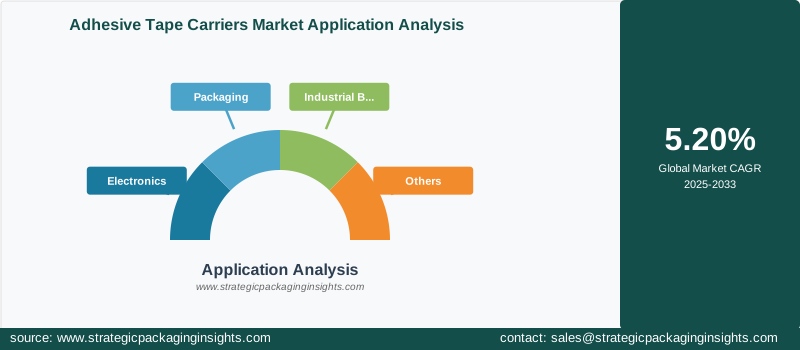
The packaging industry is another significant application area for adhesive tape carriers, driven by the increasing demand for efficient and sustainable packaging solutions. Adhesive tapes offer a cost-effective and reliable solution for sealing and securing packages, making them an essential part of the packaging process. The industrial bonding segment is characterized by the use of adhesive tapes in various manufacturing processes, where strong and durable bonding solutions are required. Other applications include automotive, construction, and healthcare, where adhesive tapes are used for bonding, sealing, and insulating purposes. Overall, the application segment is characterized by a diverse range of industries, each driving the demand for adhesive tape carriers in unique ways.
End Use Analysis
The end-use segment of the adhesive tape carriers market includes electrical & electronics, automotive, consumer goods, and others. The electrical & electronics industry is a major end-user of adhesive tape carriers, driven by the increasing production of consumer electronics and the trend towards miniaturization of electronic components. Adhesive tapes offer a lightweight and efficient solution for bonding and insulating electronic components, making them an essential part of the manufacturing process. The automotive industry is another significant end-user, driven by the need for lightweight and fuel-efficient vehicles. Adhesive tapes are used for applications such as bonding, sealing, and vibration damping, contributing to the overall performance and efficiency of vehicles.
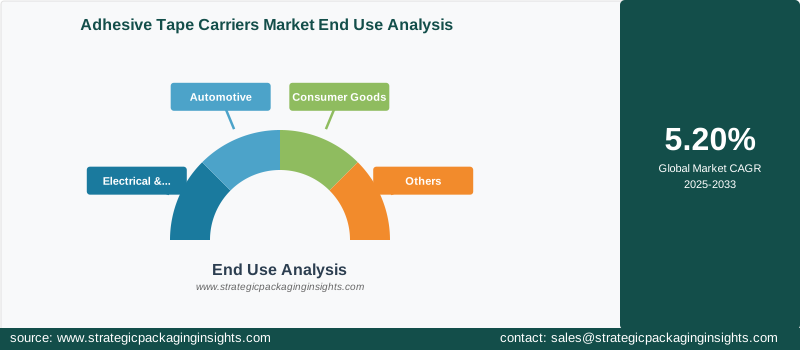
The consumer goods industry is characterized by the use of adhesive tapes in various applications, including packaging, labeling, and product assembly. The increasing demand for efficient and sustainable packaging solutions is driving the adoption of adhesive tapes in the consumer goods industry. Other end-use industries include construction, healthcare, and aerospace, where adhesive tapes are used for bonding, sealing, and insulating purposes. Overall, the end-use segment is characterized by a diverse range of industries, each driving the demand for adhesive tape carriers in unique ways.
Adhesive Tape Carriers Market Segments
The Adhesive Tape Carriers market has been segmented on the basis ofMaterial Type
- PET
- Paper
- Polyolefin
- Others
Adhesive Type
- Acrylic
- Rubber
- Silicone
- Others
Application
- Electronics
- Packaging
- Industrial Bonding
- Others
End Use
- Electrical & Electronics
- Automotive
- Consumer Goods
- Others
Region
- Asia Pacific
- North America
- Latin America
- Europe
- Middle East & Africa